Hey!👋
I am Manivelan Saminathan Vasuki, Research Scholar specializing in Nonlinear Dynamics and Chaos, delving deep into Physics through computational insights. Currently, I am investigating the statistical properties and dynamics of extreme events across various nonlinear systems. By applying chaos and Extreme Value Theory principles, I aim to deeply comprehend their occurrence and impact.
I'm ready to engage in discussions and work. For me, research is all about discovering enjoyable new things and fostering enriching connections.
Identifying Rare Events: The research focuses on detecting rare but impactful outliers in the behavior of a system. For example, a sudden spike in temperature during a weather model, or a rapid financial market crash.
Understanding Causes: It aims to understand what causes these rare events. This might involve studying how small changes in system parameters, like initial conditions or external forces, trigger these extreme behaviors.
Predicting and Mitigating Impact: By recognizing patterns leading to extreme events, this research helps predict them in the future. For instance, forecasting when a sudden flood might occur based on historical data, and suggesting preventive measures to reduce damage.
Interactions in Networks: The research looks at how individual parts of a network (like nodes in a social network or elements in a power grid) interact with each other. For example, in a social network, how people’s actions or opinions spread based on their connections.
Emergence of Complex Behaviors: It focuses on how these interactions can create new, unexpected behaviors that aren’t directly caused by any single component. For instance, how a group of animals can move together as a swarm without any leader.
Understanding Synchronization and Robustness: The research explores how networks can synchronize, like the timing of heartbeats in a group of cells, and how they maintain stability or recover from disruptions, like the resilience of a communication network during an outage.
Exploring the Chimera State: Investigates the coexistence of synchronized and desynchronized groups within the same network of interacting elements. For example, in a network of oscillators, some might sync while others remain chaotic, forming a chimera state.
Insights into Stability: This phenomenon provides valuable insights into the stability of complex systems. By understanding how some elements synchronize while others don’t, we can learn about the system's stability and its potential for transitions between states.
Transition Dynamics in Complex Systems: The research also explores how and when these transitions between synchronized and desynchronized states occur, shedding light on the dynamic behavior of complex networks, like how certain conditions can lead to the breakdown or restoration of order.
Machine Learning for Predicting Extreme Events: Leverages advanced algorithms to analyze patterns and trends in large datasets, aiming to forecast rare and significant occurrences. For instance, using machine learning to predict market crashes or natural disasters based on historical data.
Improving Prediction Accuracy: This approach enhances the accuracy and reliability of predictions in various fields, including finance, weather, and engineering. Machine learning models can identify hidden trends and correlations that traditional methods might miss.
Better Preparedness and Risk Management: By accurately forecasting extreme events, this research aids in better preparedness and risk management, helping industries take proactive measures to mitigate potential losses or damages, such as preparing for extreme weather events or financial crises.
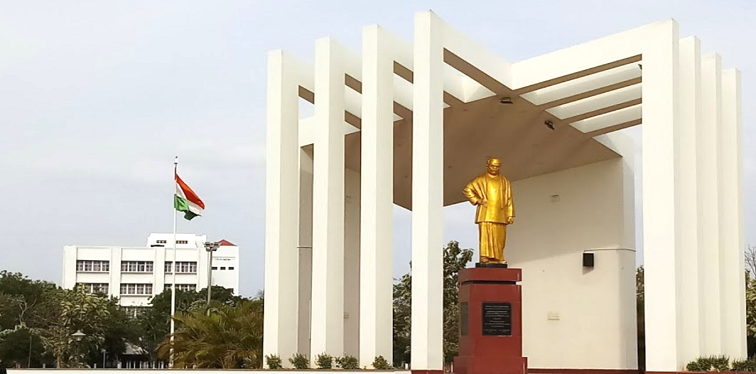
M.R. Government Arts College (Affiliated to Bharathidasan University), Mannargudi - 614001.
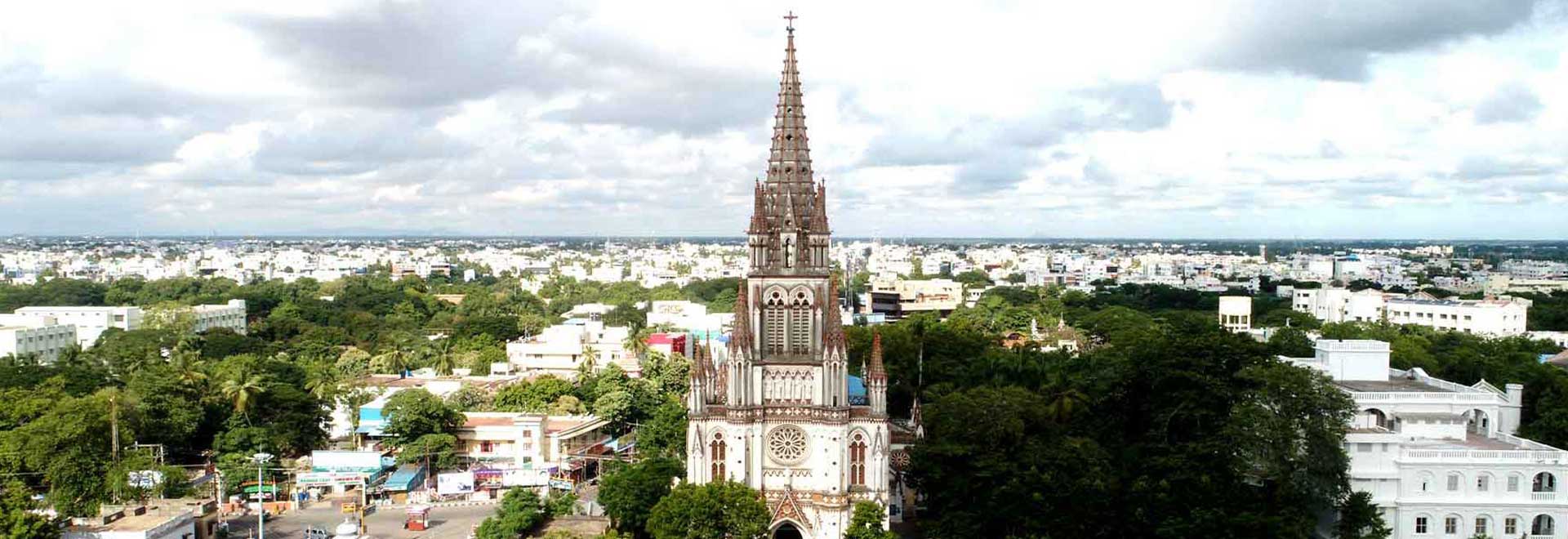
St. Joseph's College (Autonomous),
Tiruchirappalli - 620002.